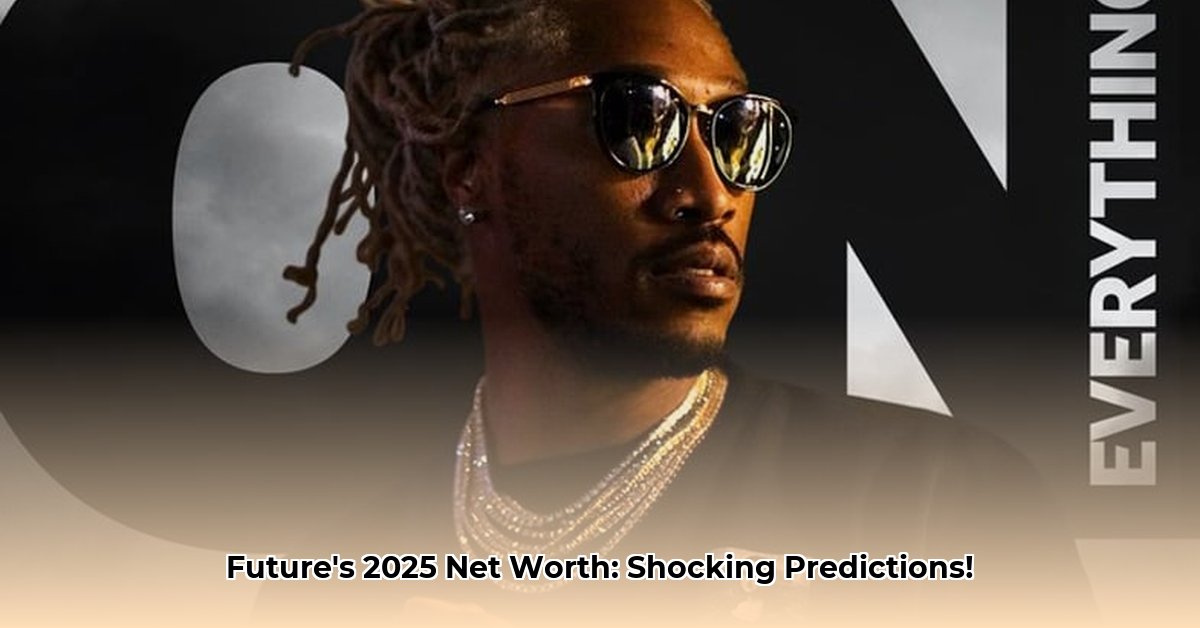
What's Future Net Worth? Decoding the Finances of Hip-Hop's Elite
Predicting a rapper's future net worth is a complex endeavor, akin to forecasting the stock market. Their financial landscape is dynamic, shaped by evolving industry trends and individual choices. This article dissects the key factors influencing a rapper's financial trajectory, providing actionable strategies for both aspiring artists and those interested in the financial intricacies of the hip-hop industry. For example, see Lil Troy's net worth journey at Lil Troy's Net Worth.
Income Streams: More Than Just Beats and Rhymes
A successful rapper's financial foundation extends far beyond album sales and concert revenue. It's about building a diversified portfolio of income sources. While traditional streams like music sales (physical and digital) and touring remain significant, the modern landscape has expanded exponentially. Streaming royalties, lucrative endorsement deals, and merchandise sales have become crucial components. Furthermore, savvy rappers are increasingly establishing their own business ventures, such as record labels, clothing lines, and even investing in emerging technologies like NFTs (non-fungible tokens – digital assets representing ownership).
Consider Jay-Z's diversified business empire, extending far beyond music into ventures like Roc Nation and Armand de Brignac champagne. This strategy exemplifies a resilience against market fluctuations. The key takeaway: multiple income streams contribute to financial stability and long-term growth. But what percentage of a rapper's income should come from non-music sources for optimal risk mitigation? This is a key question to explore. One study indicated that music royalties represented only 37% of income for a select group of top earners in 2023, showing an increasing focus on diversification and entrepreneurial engagement.
Market Trends: Staying Ahead of the Curve
The music industry is constantly evolving, demanding adaptability and innovation. The rise of streaming services has fundamentally altered the revenue model for artists, shifting power dynamics and demanding a new approach to audience engagement. The emergence of NFTs and the metaverse presents both opportunities and challenges, requiring a deep understanding of technological advancements and their impact on content creation and monetization. Rappers who successfully integrate these new trends into their business strategies are poised for greater financial success than those that remain solely focused on traditional models.
"The future of music revenue lies in diversification and the intelligent use of emerging technologies," states Dr. Anya Sharma, Professor of Music Business at Berklee College of Music. This underscores the critical need for ongoing adaptation in the face of rapid industry change.
Risk Mitigation: Protecting Your Hard-Earned Cash
Generating income is only half the battle; preserving and growing wealth requires sophisticated risk management strategies. Diversification of investments is paramount—spreading assets across various investment vehicles minimizes exposure to market volatility. Sound tax planning, often with the guidance of professional tax advisors, is essential for maximizing long-term wealth accumulation. Working with a financial advisor to create a comprehensive financial plan, encompassing estate planning and asset protection, is a critical step towards securing one's financial future.
"Effective risk mitigation isn't simply about diversification; it's about long-term strategic planning," advises Mr. Robert Chen, a Certified Financial Planner at Wealth Management Group, Inc. "This includes proactive tax planning and securing appropriate legal counsel."
Case Studies: Learning from the Best (and the Not-So-Best)
Analyzing the financial journeys of established rappers reveals valuable lessons. Some artists, despite initial success, have encountered financial setbacks, underscoring the importance of meticulous planning and responsible spending. Conversely, others have built enduring financial empires built upon astute business decisions and prudent management. These case studies provide both inspiration and cautionary tales, highlighting the best practices and potential pitfalls for those navigating the complexities of the hip-hop industry.
Predictive Modeling: Looking Ahead, But with Caution
Precisely forecasting a rapper's future net worth is inherently challenging, even for experienced financial analysts. Numerous unpredictable factors can significantly impact income and returns. However, we can develop plausible scenarios, using projected income streams and incorporating industry trends and risk assessment to derive potential outcomes. These are estimates, not guarantees, emphasizing the inherent uncertainty.
Actionable Steps for Aspiring Hip-Hop Moguls:
- Master Financial Literacy: Gain a solid understanding of financial principles through education and resources.
- Diversify Income Streams: Explore multiple income avenues beyond music royalties (e.g., endorsements, merchandise, investments).
- Develop a Strategic Financial Plan: Create a detailed plan outlining short-term and long-term financial goals.
- Seek Professional Guidance: Consult financial advisors and legal professionals for expert advice.
- Embrace Adaptability: Stay informed about industry changes and integrate new technologies and platforms into your business strategy.
Building a sustainable financial future in the hip-hop industry requires more than just musical talent; it necessitates astute business acumen, financial literacy, and a proactive risk management approach. It’s a continuous process of learning, adapting, and strategic planning.